 Cre8Travel
CRE8TRAVEL · MAINE PLACES
Lamoine Beach Park
Lamoine Beach Park: A Pause beside Frenchman Bay
Discover
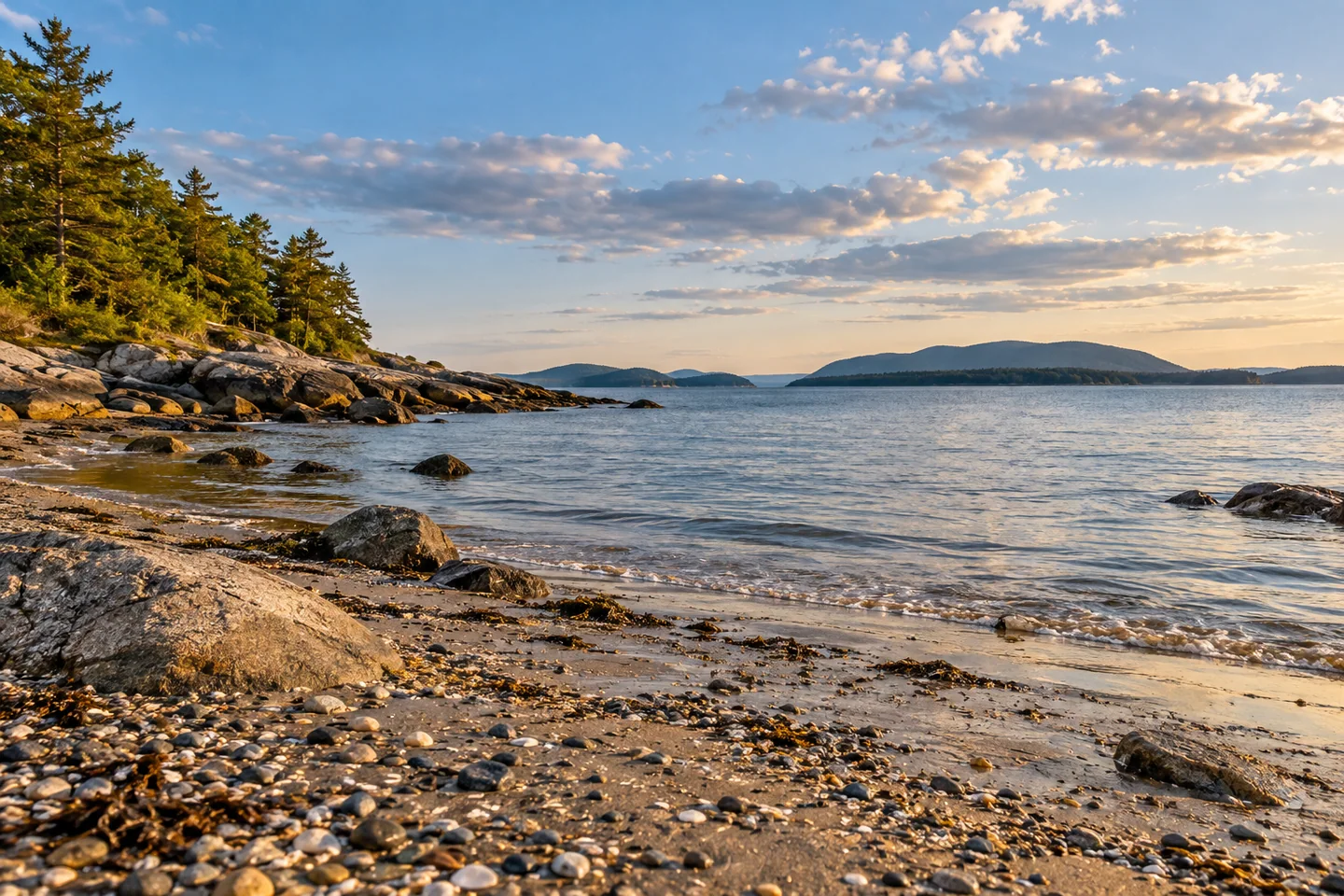
Lamoine Beach Park brings the road to a public shore looking toward Mount Desert Island and Frenchman Bay. Follow Lamoine Beach Road, Route 184, to its end and use the town's designated park access. Picnic facilities make this a place to pause, with the bay itself providing the main subject. Allow the tide and the day's conditions to shape how far a shoreline stroll makes sense.
The beach has a recent history of substantial change. Lamoine's 2024 town report describes January storms coinciding with high tides, eroding the grassed edge between picnic ground and beach and washing debris inland. The town removed a deteriorated boat ramp with permission from the relevant public agencies. Older travel directions mentioning that ramp therefore describe a feature that no longer provides the same facility.
A 2026 shoreline project presentation explains the challenge in broader terms. It identifies lost dune vegetation, exposure to storm waves, and the effects of vehicles historically reaching the shore. Proposed work includes a vegetated foredune and clearer pedestrian access while retaining hand-carry boating access. Those are restoration aims, rather than a promise of a completed new landscape. Follow current signs around any protected or managed area.
The writers of Living with a Golden recorded a quiet personal visit, finding just one other family and a birdwatcher at the beach that day. They valued the rocky shore, views across the water, and room to spend time outside with a dog. Their account makes a modest outing appealing through its ordinary pleasures; present conditions and the number of visitors can naturally be different.
For writer Carolyn C. Holland, Lamoine Beach carried a more private meaning. In her 2013 reflection on favorite New England beaches, she recalls a powerful sense of connection on first arriving here. Family research had linked her ancestors with the area. Her description attends to sand, mussel shells, and rock, but the strongest part of the memory is belonging to a place she had come to understand through genealogy.
Local history helps place such personal connections in a wider setting. Josephine Cooper's account for the Lamoine Historical Society, published by the town, describes coastal coves and inlets as a major attraction for settlers. During the first half of the nineteenth century, the area became an important shipbuilding center, with more than sixty vessels built locally. A present view across the bay has a working maritime history behind it.
The town's visitor guide describes year-round public access, with facilities maintained seasonally, and notes that the bottom can be muddy or rocky with the tides. There is no lifeguard. A picnic and a view can be a complete visit; anyone considering water activities should make a separate decision using current conditions and local guidance. Organized larger gatherings require arrangements with the town.
Before leaving, consider what has given the stop its meaning for you. It may be a view, a conversation, or an association that reaches beyond today's outing. A place remembered for a personal reason can remain vivid long after an itinerary's larger attractions blur together. Give that possibility a little time rather than deciding in advance what the beach ought to provide.
Before you go
- Do not rely on older directions describing the removed boat ramp.
- Follow designated access around shoreline protection work.
- Plan for seasonal facilities and an unguarded, tide-dependent shore.
Visitor perspectives
- Living with a Golden’s writers enjoyed a quiet visit with only one other family and a birdwatcher present.
- Carolyn Holland recalls a powerful sense of connection at Lamoine Beach through her family’s history in the area.
Capture
- Keep sand, shell, and rock textures within a wider view of the bay.
- Choose a quiet public position that leaves room for other visitors.
 Holt Mill Pond Preserve
 Hinkle Preserve
 Belfast Common
Social
Route 184 ends at a public beach with a view across Frenchman Bay.
Storm damage is part of the beach’s recent history.
Restoration planning considers dunes, vegetation, and public access together.
One dog-walking family remembered an especially quiet beach visit.
For Carolyn Holland, genealogy gave this shore a powerful personal meaning.
Lamoine’s coves once supported a substantial shipbuilding industry.
Which place has become memorable for a reason only you can explain?
Leave room for a simple stop to acquire its own meaning.
Hashtags