 Cre8Travel
CRE8TRAVEL · MAINE PLACES
History House
Skowhegan History House: A Cottage Full of Community Stories
Discover
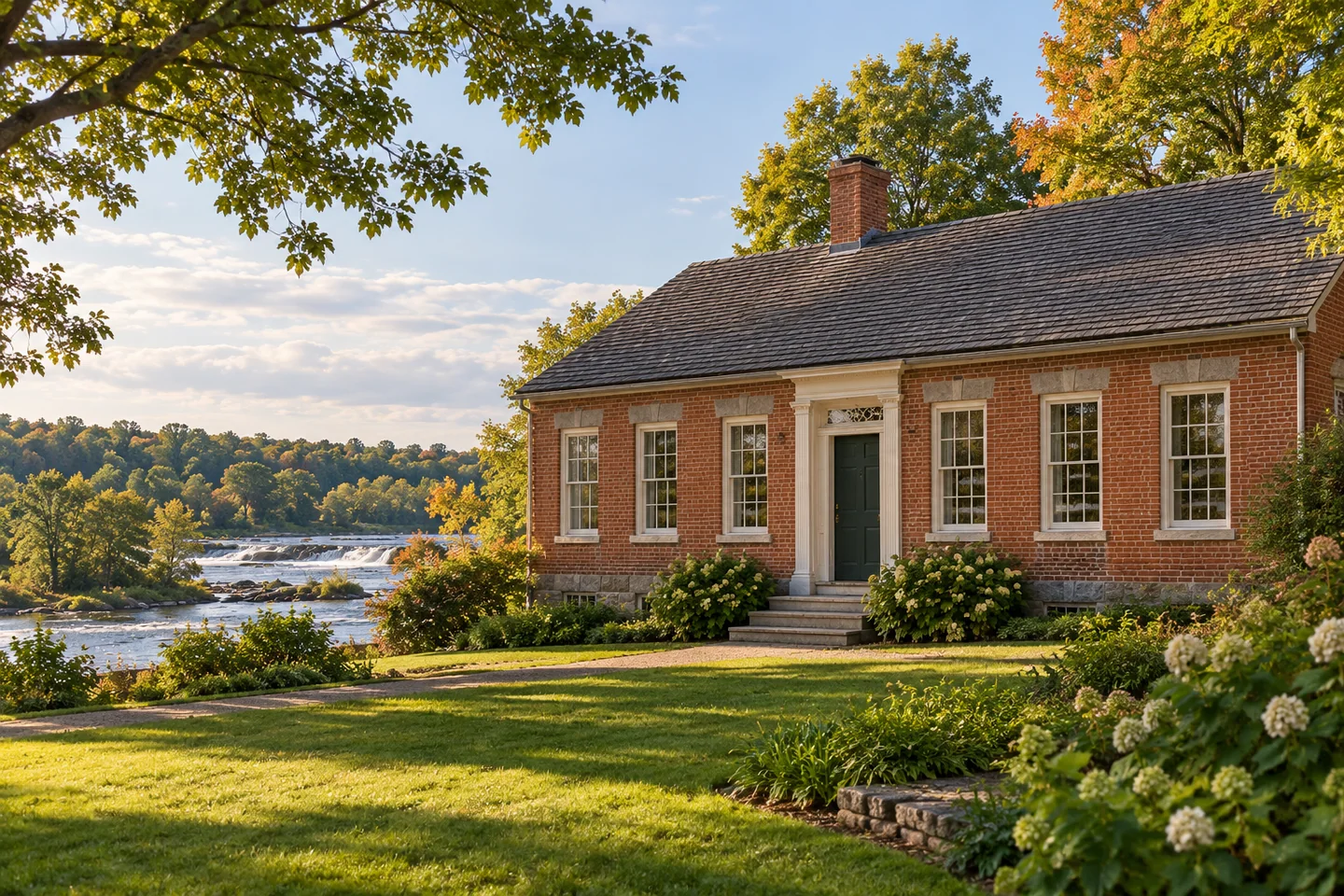
Skowhegan History House rewards a close look at a small building with a remarkably full biography. Its brick cottage stands on the Kennebec River’s eastern bank, above the falls. The museum’s history acknowledges earlier Abnaki seasonal fishing and planting at this place. Later, riverbank clay supplied local pottery production, including the Philbrick family’s enterprise. A visit can therefore begin with the site itself: river, working ground and domestic home belong to the same layered story.
The cottage dates to 1839. Its subsequent occupants included the Lord family and then the Tiltons; after the last Tilton sister died in 1908, vacancy and warehouse use followed. Louise Helen Coburn’s purchase in 1936 began its transformation into a museum. That rescue gives the house particular interest: the familiar-looking rooms emerged from a deliberate effort to preserve evidence of everyday local life.
Architecture adds another way to read the place. The National Register nomination describes a low, five-bay brick house with a gable roof, granite foundation and granite lintels. Look for the restrained Greek Revival entrance, where pilasters and fretwork give a modest doorway unusual presence. The document also records six-over-six windows and surviving interior woodwork. Begin with the overall proportions, then let those smaller details bring the building into focus.
Coburn’s research explains why the museum extends beyond furnished rooms. The original rear annex included cabinetry designed for material supporting her two-volume Skowhegan on the Kennebec, published in 1941. A major 2024 renovation renamed that annex the Louise Helen Coburn Research Center. The institution now describes a collection exceeding 10,000 items, spanning textiles, photographs, books, domestic objects and archival documents.
The online collection is only a sample of those holdings, so a productive research visit begins with a question. A family name, occupation, address or object type can give the conversation direction. Decide whether you chiefly want to understand a household, follow a local industry, or examine how historians assemble a town’s story from surviving evidence. Leave room for the collection to suggest a different question.
The state archives directory identifies particularly vivid objects: locally made redware, a late-nineteenth-century disc-playing music box, historic clothing and the Alexander Crawford Jr. Civil War material. It also describes a steam-bath cabinet associated with a local inventor. Such objects invite comparison between ordinary routines, entertainment and past ideas about health. Read those historical claims as evidence of their period, rather than advice to adopt today.
Plan the physical visit around the museum’s seasonal arrangements, and contact the curator in advance for a tour or research appointment. That small amount of preparation helps distinguish a general house visit from time spent investigating records. It also allows you to explain what you hope to learn before arriving, especially when a particular collection is central to the trip.
Give the experience an unhurried shape: first notice the building, then choose a few objects, and finish by connecting one of them with a person or activity. A useful souvenir might be a better question about your own community. History becomes considerably more interesting when a household object stops being anonymous and starts explaining how someone lived.
Fun facts
- Riverbank clay once supported pottery making at the site.
- The house’s entrance includes Greek Revival pilasters and fretwork.
- The research center grew from Coburn’s historical manuscripts.
Before you go
- Contact the curator before planning a seasonal tour or research visit.
- Bring a focused question about a name, place or occupation.
- Read historical health devices as artifacts of past beliefs.
Capture
- Frame the brick facade squarely enough to show its five-bay proportions.
- Ask the museum before photographing collection objects or documents.
 Worthley Pond
 Baker Mountain
 Parks Pond
Social
A small brick cottage can hold a substantial community story.
Skowhegan History House connects riverbank work with domestic life.
Look closely at granite lintels and a restrained Greek Revival doorway.
Coburn’s research helped turn a house into a community archive.
Redware and a disc-playing music box bring different household routines into view.
A focused research question is a useful thing to pack.
Choose one object and ask what activity it once supported.
Leave with a question worth pursuing in your own town.
Hashtags