 Cre8Travel
CRE8TRAVEL · MAINE PLACES
Dyce Head Light
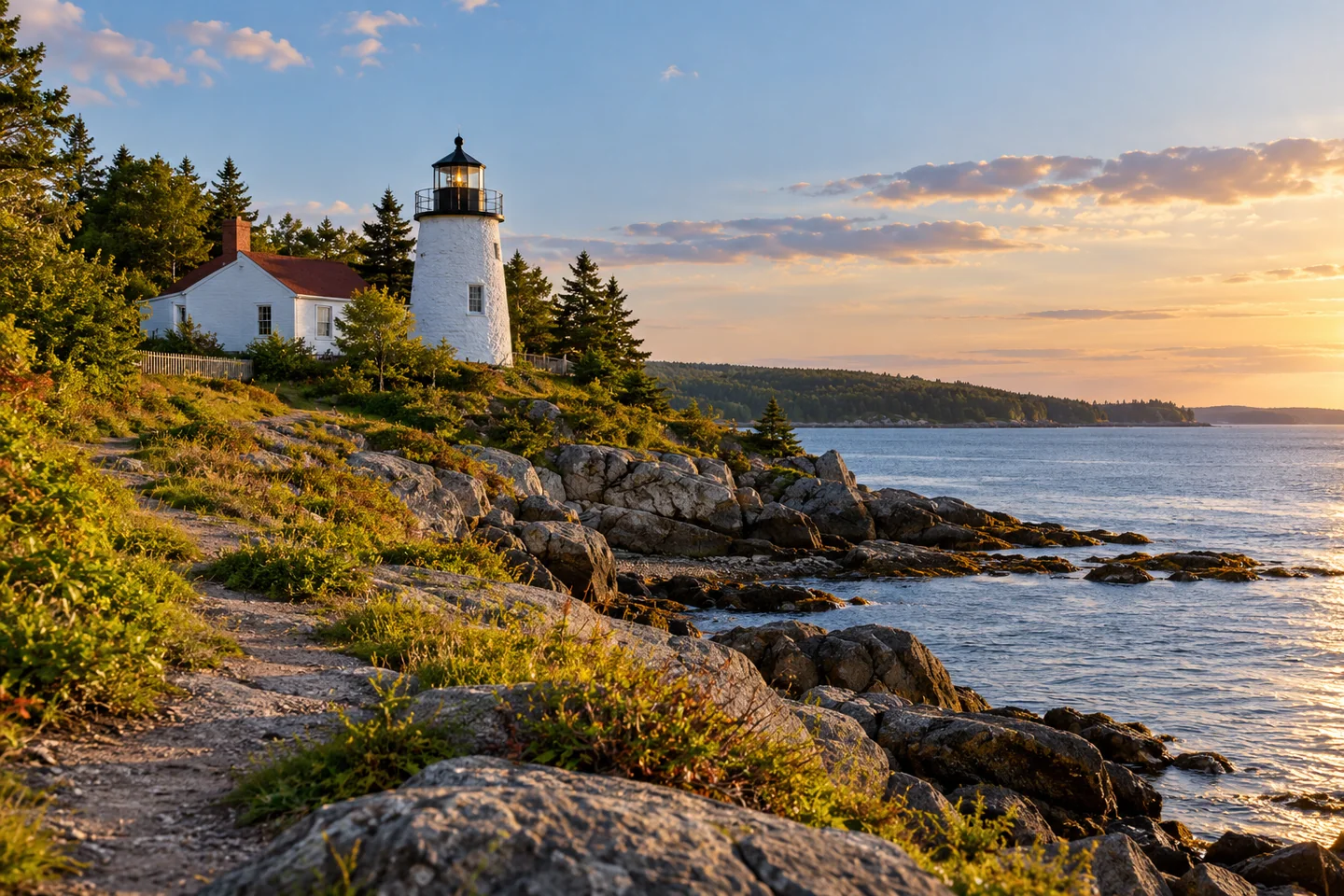
Dyce Head Light: A Castine Landmark by the Water
Discover
Dyce Head Light stands at the end of Battle Avenue in Castine, with public grounds around a lighthouse and a privately occupied keeper's dwelling. Sometimes spelled Dice Head, the landmark offers an outdoor visit even when its tower is closed. Follow the signed public approach, respect the residence, and check the town's calendar separately if an interior tour is important to your plans.
The distinction between the two kinds of access became especially interesting in 2026. The town advertised a series of public tower openings, and Annie Means reported for The Rising Tide on the volunteers making more frequent visits possible. Her account describes a spiral staircase and exhibits in the vestibule that connect lighthouse history with the significance of this landscape to Wabanaki people. An open day can therefore add interpretation as well as a higher viewpoint.
Means traces the lighthouse to 1828 and identifies Jacob Shelburne, a ship's captain, as its first keeper. Keeping the light burning once involved oil lamps and reflectors, followed by successive generations of keepers. Later technology shifted the signal away from the stone tower to a metal framework closer to shore. After a storm destroyed that replacement in 2007, the old tower regained its navigational role. The familiar historic structure belongs to an ongoing sequence of practical adaptations.
Ed Schellhase's original travel journal records a 2016 visit that stayed outside. After traveling to Castine, he photographed the light and keeper's house from the road, then followed the trail toward the shore. The sequence offers a useful way to imagine a compact stop: begin with the building in its setting, then see how the view changes as the path moves down toward the water.
A more recent photographer, posting as Celtis 87 in May 2026 on Ugly Hedgehog, noticed the same boundary between a public landmark and someone's home. The writer admired the lighthouse, made photographs, and moved on in response to the local privacy signs. It is a small observation, yet it shows how consideration can shape the visit itself rather than being an afterthought to getting a picture.
Tripadvisor contributor cerauffer describes the footpath as a quick walk with a rewarding outlook once reaching the rocks. Another visitor, ik 631, found the short outing before dinner enjoyable but initially felt unusual about walking near a backyard, until signs clarified the route. Read these as individual experiences, with conditions and comfort varying. Give the marked approach more attention than a remembered shortcut or an old description of the grounds.
The state's visitor information also separates public grounds from the private house. That simple distinction helps set expectations for a casual arrival. You can appreciate the relationship between land, buildings, and harbor approaches without assuming that every doorway or nearby patch of shoreline is part of the public route. For tower access, rely on a currently advertised opening rather than a general lighthouse listing.
Before leaving, choose the detail that best explains the place to you. It might be a useful structure that found a renewed role, a view reached after a short approach, or the care needed where a landmark and a home stand together. Let that detail guide a last look. A compact visit can become memorable through one well-understood relationship.
Before you go
- Respect the private keeper’s dwelling and follow the signed public route.
- Check the town’s current calendar before planning a tower climb.
Visitor perspectives
- Ed Schellhase photographed the lighthouse from the road and followed the trail to the shore.
- Celtis 87 photographed the lighthouse while respecting signs about the adjacent home’s privacy.
Capture
- Compare the building’s roadside setting with the view along the public shore path.
- Make a considerate composition that respects signs and residential privacy.
 Pemaquid Beach Park
 Saint George Historical Society
 Kenneth E. Stoddard Shell Museum
Social
Dyce Head combines public lighthouse grounds with a privately occupied dwelling.
A storm’s aftermath helped return the signal to the historic tower.
Ed Schellhase documented an exterior visit in 2016.
A 2026 photographer let local privacy signs shape the stop.
One walker valued a short path and a rewarding water view.
Which relationship makes a landmark memorable for you?
Give a small place enough attention to reveal its story.
One clear detail can be a satisfying travel memory.
Hashtags