 Cre8Travel
CRE8TRAVEL · MAINE PLACES
Chester Ladd Legacy Forest
Chester Ladd Legacy Forest: Woods and Wetlands in Vienna
Discover
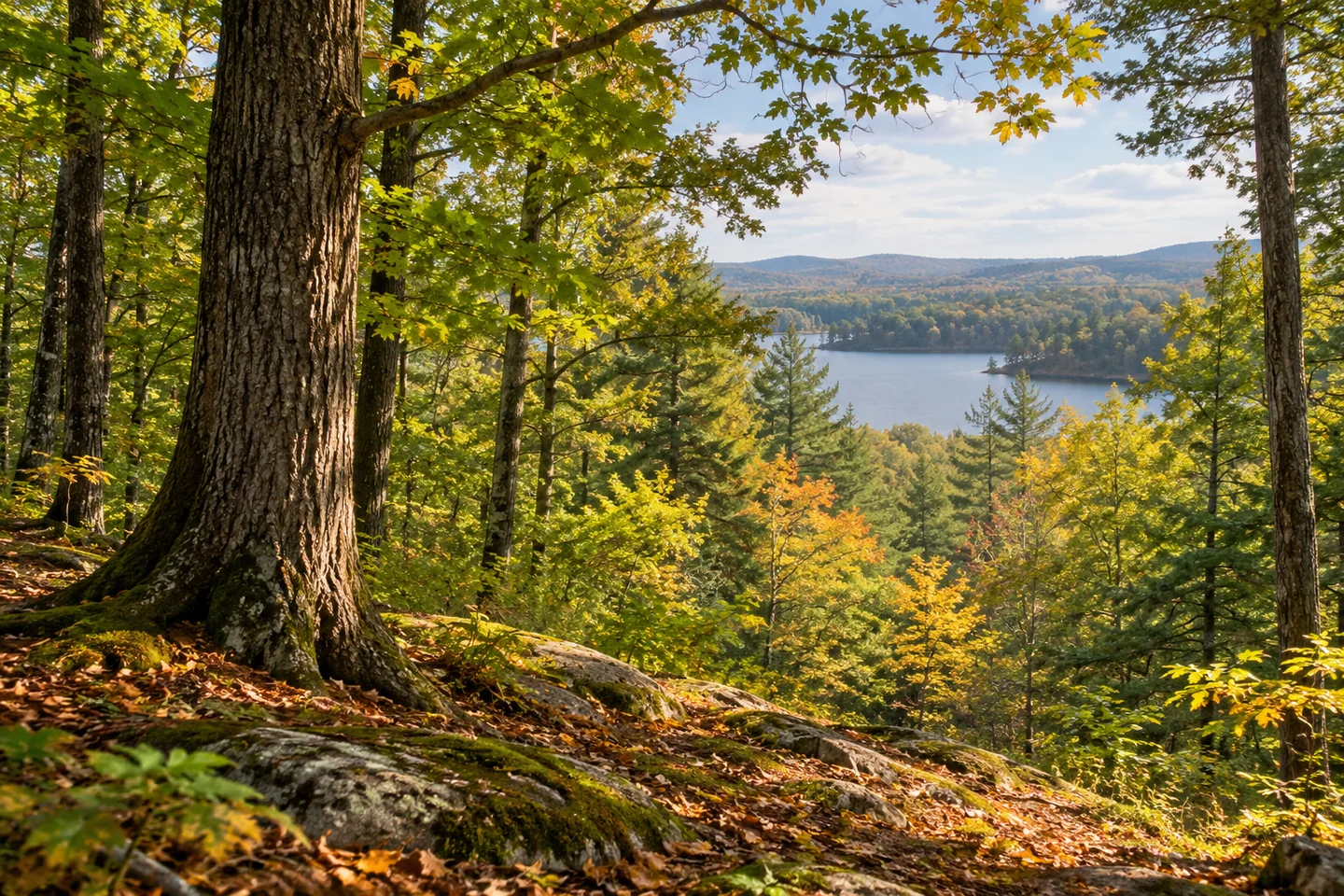
Chester Ladd Legacy Forest is a Maine Woodland Owners property on Cumner Road in Vienna. The current owner profile describes productive woodland mixed with wetlands, swamps, and meadows, on ground ranging from rolling to relatively flat with occasional rock exposures. Bent Pond lies within the property, which also has frontage on Black Pond. Those features give a nature outing several subjects to notice without assuming a marked circuit or a developed waterfront facility.
The owner's present policy welcomes hiking and nature walks on its lands. It also asks visitors to leave natural material in place and remove everything they bring. Contact the organization about the appropriate approach and any current work before visiting this forest. Public recreational welcome does not establish a signposted trailhead, unrestricted vehicle access, or permission to enter a research plot.
Jeanne Siviski's original 2015 report explains a distinctive part of Ladd Forest's story: experimental American chestnut planting. Researcher Brian Roth was interested in the tension between cold tolerance and resistance to chestnut blight. At the northern edge of the tree's historic range, an improved ability to resist disease would not by itself solve the problem of surviving severe winter conditions. The forest offered a place to investigate both questions together.
The report describes a partially harvested hillside with well-drained soil and an overstory of pine, beech, maple, and oak. Retained trees were intended to offer shelter from cold and drying winds while leaving light for seedlings. Plantings compared sources from contrasting climates and different levels of disease resistance. These details describe the research at that time, rather than confirming that the same layout, labels, or seedlings remain visible today.
The American Chestnut Foundation's account of an October 2017 tour records a later visit to the Vienna trial. Participants discussed preparing the site for seedlings and using the remaining canopy for protection. The account thanks the people who helped explain the project. It documents an organized educational stop, not a current standing tour or an invitation for independent visitors to handle the trees.
Maine Woodland Owners places this land within its wider commitment to working forests. Its donation program accepts properties where active management is allowed, uses forest-management plans, and combines conservation with education and public recreation. A forest can consequently be both protected from development and actively tended. That approach helps explain why advance information about forestry activity is relevant to planning a visit, alongside an interest in habitat or scenery.
Campfires and overnight camping are excluded by the current property policy. Motorized recreation also requires specific authorization, so do not treat an old tour booklet as permission to bring a vehicle onto a woodland route. Keep the outing within the owner's present guidance.
For a record of the day, choose a permitted view that captures the relationship between a particular tree and the woodland around it. A short note about the question that interested you can make a modest photograph meaningful. The forest's scientific history can enrich an outing even when its experimental work is appreciated through reading rather than close access to the research area.
Fun facts
- Bent Pond and frontage on Black Pond form part of the forest’s varied setting.
Before you go
- Confirm the appropriate approach and current property conditions with the owner.
- Observe the forest without entering or disturbing a research plot.
Capture
- Use a permitted woodland viewpoint to show a tree within its surrounding forest.
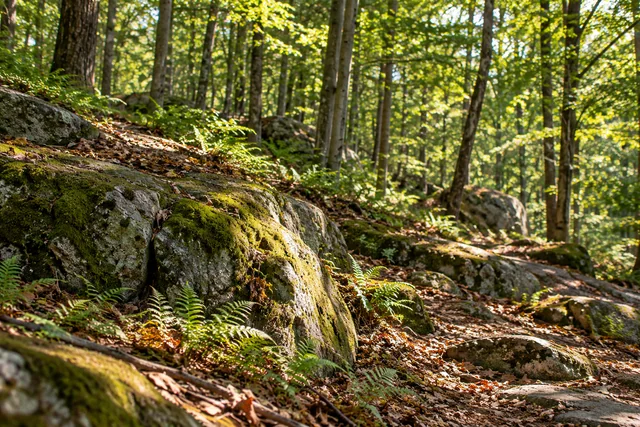 Wayne’s 100-Acre Wood
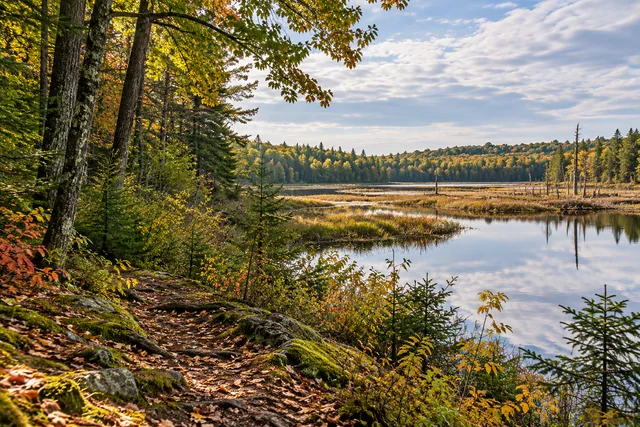 Alonzo H. Garcelon Wildlife Management Area
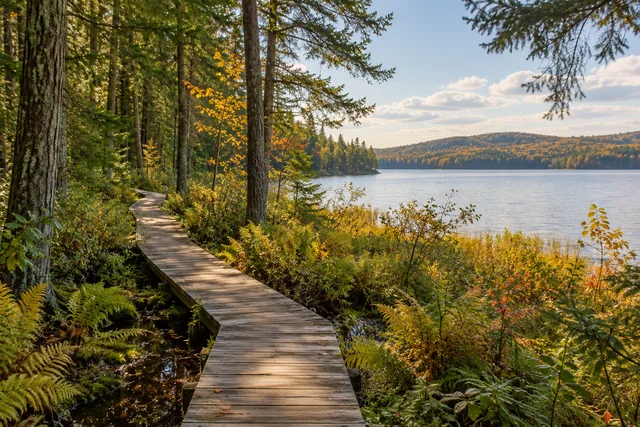 Fogg Island Preserve and Trail
Social
Chester Ladd Legacy Forest combines productive woods with wetland habitats.
A historical chestnut trial examined both winter tolerance and disease resistance.
An organized 2017 tour introduced participants to the Vienna planting.
Working-forest conservation can include both management and recreation.
The current policy welcomes nature walks while excluding camping and fires.
A research question can change the way a woodland looks to a visitor.
Observe the setting without making close access a requirement.
What would you want to learn about a familiar tree?
Hashtags