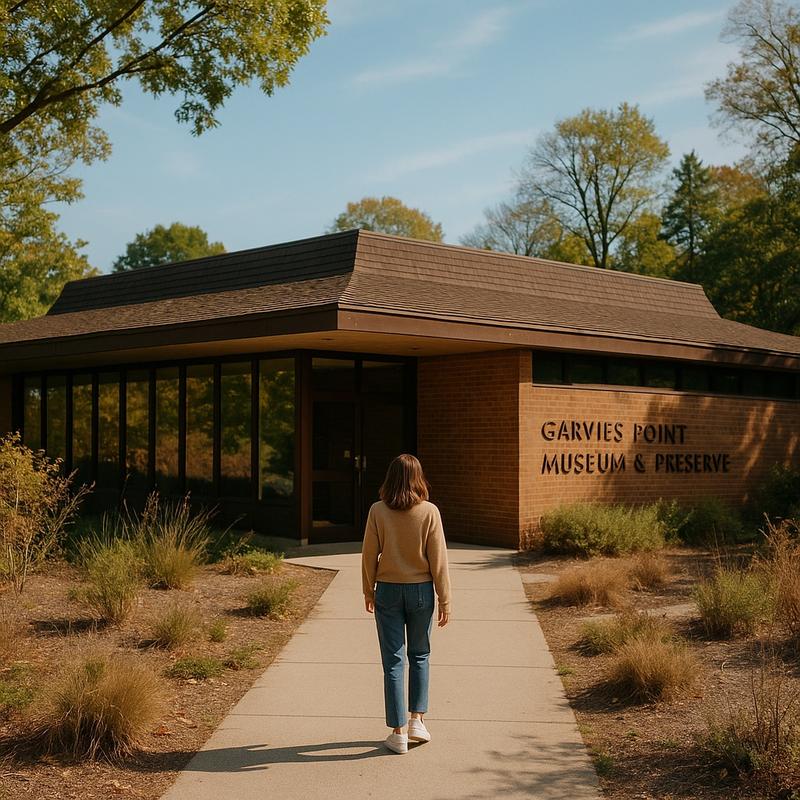
Spot
Garvies Point Museum & Preserve Hotspots Photography Guide
- Best Time to Shoot: Mid-morning to early afternoon.
- Photography Tips: Use a tripod to capture the intricate details in low-light conditions. Experiment with depth of field to highlight the texture, colors, and craftsmanship of the dioramas.
- Best Time to Shoot: Early morning or late afternoon.
- Photography Tips: Utilize natural lighting to capture the richness of the surrounding flora and fauna. Incorporate leading lines to create depth and guide the viewer's eye through the frame. Look for unique perspectives and focus on capturing the diverse range of species and habitats along the trail.
- Best Time to Shoot: During opening hours when natural light is available.
- Photography Tips: Pay attention to the intricate patterns, textures, and colors of the rocks and minerals on display. Use a polarizing filter to reduce reflections and enhance the details. Experiment with different angles and focal lengths for dynamic compositions.
- Best Time to Shoot: Late afternoon to capture golden hour light.
- Photography Tips: Capture the excitement of discovery by incorporating human elements. Frame your shot to showcase the tools used in the excavation process. Explore different perspectives, such as close-ups of artifacts or wide-angle shots of the entire site, to tell a visual story of the archaeologists' work.
- Best Time to Shoot: Early morning or early evening for soft, directional lighting.
- Photography Tips: Use the pond as a foreground element to enhance the composition. Experiment with long exposures to capture motion or reflections in the water. Incorporate leading lines to guide the viewer's gaze towards the surrounding landscape.