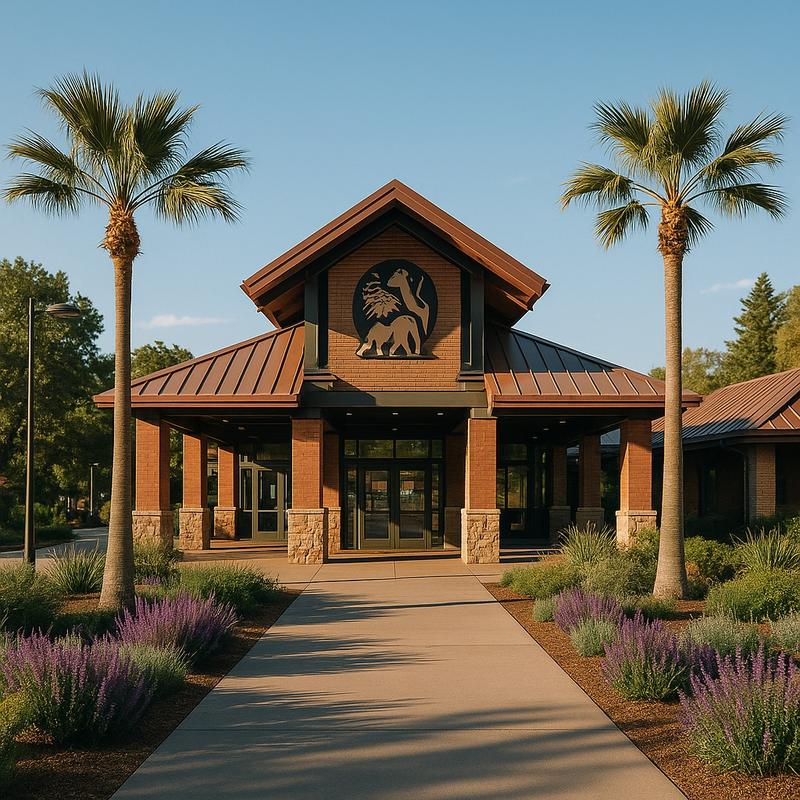
Capture static page

Denver Zoo

A structured Capture page rebuilt from the live CAPTURE tab, focused on photography spots, timing, and shooting advice.

Open full live travel page Open live CAPTURE tab
Place ID
ChIJcY8lIE55bIcRKWyHPdIO_VM
Address
2300 Steele St, Denver, CO 80205, USA
Tab
CAPTURE
Denver Zoo
Photo Tips

Shot ideas and timing notes

Each photo spot is broken out into its own card so the page is usable as a quick visual planning guide.
Spot

Predator Ridge

  • Best Time to Shoot: Early morning or late afternoon when the animals are most active.
  • Photography Tips: Use a telephoto lens to capture close-ups without disturbing the animals. Experiment with different angles and depths of field to add drama to your shots. Be patient and observe their behavior to capture their unique expressions and interactions.
Spot

Tropical Discovery

  • Best Time to Shoot: Mid-morning or mid-afternoon when the natural light is soft and diffused.
  • Photography Tips: Increase ISO to compensate for the low light conditions. Use a polarizing filter to reduce glare and enhance the vibrant colors. Look for interesting textures, patterns, and details in the foliage to create compositions with depth. Experiment with different white balance settings to find the perfect color tones.
Spot

Primate Panorama

  • Best Time to Shoot: Late morning or early afternoon for good lighting and active primates.
  • Photography Tips: Use a fast shutter speed to freeze the energetic movements of the primates. Shoot through the glass or mesh enclosures by placing your lens as close to the barrier as possible to minimize reflections and distractions. Capture their expressions, gestures, and interactions to convey their intelligence and personality.
Spot

Bird World

  • Best Time to Shoot: Early morning or late afternoon for soft lighting and birds in motion.
  • Photography Tips: Use a long telephoto lens to capture the birds in flight or perched on branches. Select a high shutter speed to freeze their fast movements. Pay attention to backgrounds, ensuring they are clean and uncluttered to make the birds stand out. Consider using a tripod or monopod for stability and sharpness in your shots.
Spot

Bear Mountain

  • Best Time to Shoot: Morning or late afternoon for even lighting and active bears.
  • Photography Tips: Use a telephoto lens for close-ups from a safe distance. Experiment with different angles to capture their playfulness, expressions, or natural behaviors. Look for moments of interaction between bears to tell a story. Shoot in burst mode to increase your chances of capturing dynamic shots.
Spot

Toyota Elephant Passage

  • Best Time to Shoot: Mid-morning or mid-afternoon when elephants are more active.
  • Photography Tips: Use a wide-angle lens to capture both the elephants and the beautiful surroundings. Pay attention to the lighting and avoid harsh shadows on their faces. Experiment with different perspectives, such as shooting from ground level to enhance their size and strength. Look for interactions between elephants or interesting behaviors to convey their social dynamics.
Spot

Northern Shores

  • Best Time to Shoot: Early morning or late afternoon for gentle lighting and active sea lions.
  • Photography Tips: Use a fast shutter speed to capture the sea lions' agility both in water and on land. Look for interesting compositions that incorporate the playful behavior of the sea lions, such as jumping or interacting with each other. Pay attention to the background to avoid distractions and maintain focus on the main subject.
Spot

Harmony Hill

  • Best Time to Shoot: Late afternoon for soft lighting and active rhinos.
  • Photography Tips: Use a telephoto lens to capture close-ups while maintaining a safe distance. Look for opportunities to capture natural behavior, like mud bathing or grazing. Experiment with different angles and compositions to emphasize their size and strength. Pay attention to the details, like their textures or unique features, to create compelling images.
Spot

Colorado Wilderness

  • Best Time to Shoot: Early morning or late afternoon for warm and golden lighting.
  • Photography Tips: Use a wide-angle lens to capture the sweeping landscapes and dramatic skies. Experiment with different compositions that incorporate leading lines or natural elements to create depth. Use a polarizing filter to enhance the colors and reduce glare. Incorporate human elements to give a sense of scale and connection to the environment.