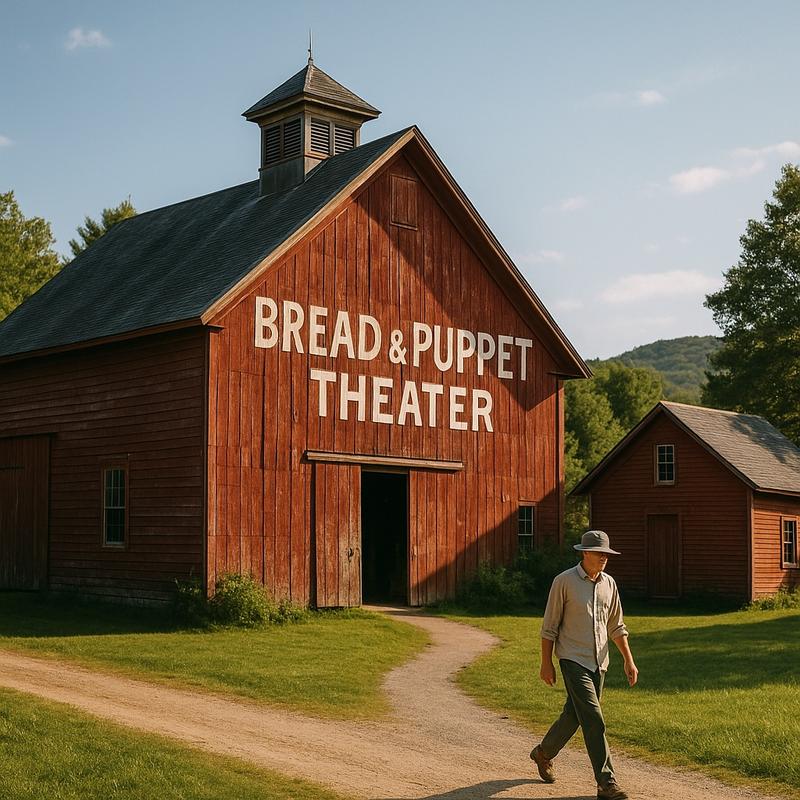
Spot
Bread & Puppet Theatre
- Best time to shoot: During the golden hour just before sunset for beautiful lighting.
- Photography tip: Use a wide-angle lens to capture the vastness of the outdoor theater and include the stunning surrounding landscapes. Experiment with slow shutter speeds to create motion blur and convey the energetic atmosphere.
- Best time to shoot: Early morning or late afternoon when fewer visitors are around.
- Photography tip: Get up close to the giant puppets to capture the intricate details and textures. Utilize a shallow depth of field to isolate individual puppets from the background. Experiment with different angles and perspectives to highlight their scale and artistry.
- Best time to shoot: Midweek when it's less crowded for a more immersive experience.
- Photography tip: Pay attention to the lighting within the museum and adjust your camera settings accordingly. Avoid using flash to preserve the atmosphere. Capture close-up shots of the puppets' expressive faces, focusing on their craftsmanship and unique features.
- Best time to shoot: During weekday mornings when the workshops and rehearsals are in full swing.
- Photography tip: Use a fast lens to capture action shots of puppeteers in motion. Experiment with different shutter speeds to freeze movement or convey a sense of dynamism. Look for interesting angles to showcase the artist's creative environment and the energy of the team at work.
- Best time to shoot: At any time of the day when the lighting conditions are favorable.
- Photography tip: Explore different perspectives to capture the scale and grandeur of the outdoor sculptures. Utilize leading lines in your composition to draw the viewer's attention. Experiment with long-exposure techniques, particularly during twilight, to create dramatic effects with moving clouds or flowing water nearby.