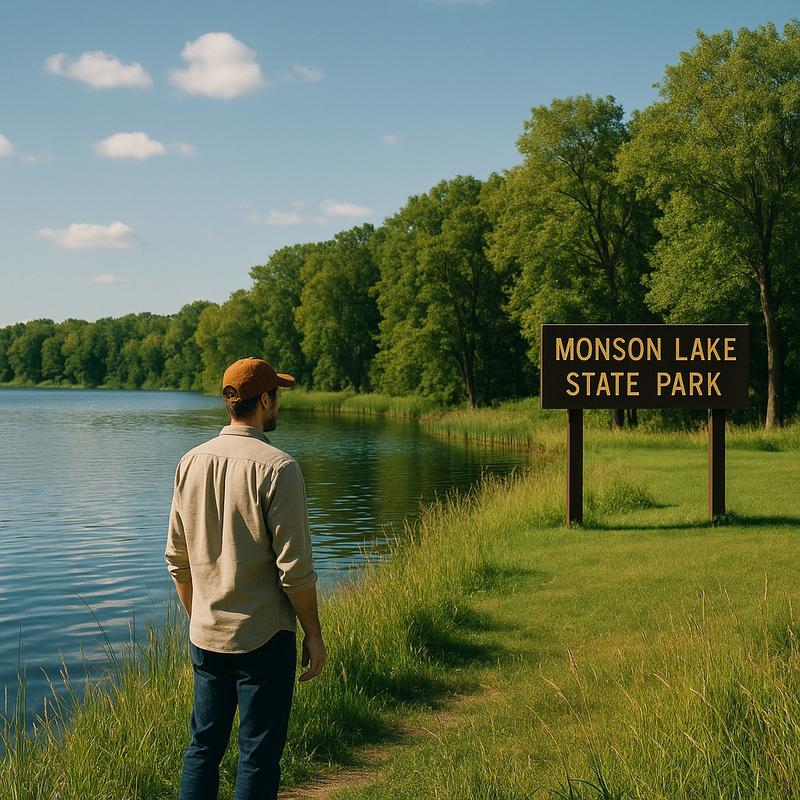
Spot
Monson Lake State Park Travel Photography Tips
- Best Time to Shoot: Golden hour (just after sunrise or before sunset) to capture warm hues reflecting off the lake.
- Photography Tips: Experiment with different angles to incorporate the surrounding trees and capture reflections on the tranquil lake surface.
- Best Time to Shoot: Mid-morning to early afternoon, when the sunlight pierces through the trees, creating dramatic shadows and highlighting the vibrant greens.
- Photography Tips: Utilize a wide-angle lens to capture the depth and grandeur of the forest, and try a long exposure to capture the movement of leaves in the wind.
- Best Time to Shoot: Just before sunset, the soft golden light creates a magical atmosphere over the picturesque landscape.
- Photography Tips: Use a tripod to ensure sharpness, experiment with different exposures to balance the vibrant colors of the sky, and consider including a silhouette in the foreground to add depth to your composition.
- Best Time to Shoot: Early morning or late evening when wildlife is most active, providing opportunities for unique shots.
- Photography Tips: Use a telephoto lens to capture detailed shots of the animals, be patient and attentive to capture those fleeting moments, and make sure to respect the animals' space by maintaining a safe distance.
- Best Time to Shoot: Anytime during the day, depending on the desired mood and lighting conditions.
- Photography Tips: Experiment with different angles and compositions to emphasize the ruins' texture and tell a story by incorporating their surroundings. Consider using black and white or sepia processing to enhance the sense of history.